
Fabric: The Invisible Architecture of a Suit
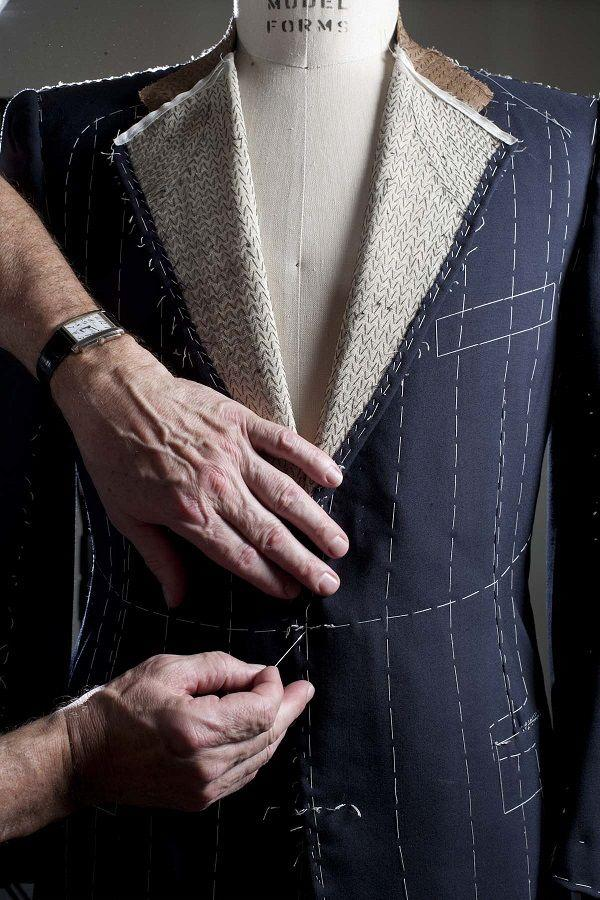
In the world of bespoke tailoring, what lies beneath the surface is just as important as what is seen. While most discussions of luxury suits focus on silhouette, cut, and finishing details, the true foundation of a garment’s structure begins with fabric. Far from being a passive material, fabric actively determines how a suit holds its shape, moves with the body, and ages over time.
A bespoke suit is not simply constructed—it is engineered. And at the heart of this engineering lies a critical variable: fabric quality. From the weight and stiffness of wool to the delicacy of high Super fabrics, each textile imposes its own structural logic, requiring the tailor to adapt technique, canvas, and proportion accordingly.
Weight as Structure: The Foundation of Form
One of the most decisive factors influencing a suit’s structure is fabric weight. Traditionally measured in ounces, fabric weight directly affects how a garment behaves when worn.
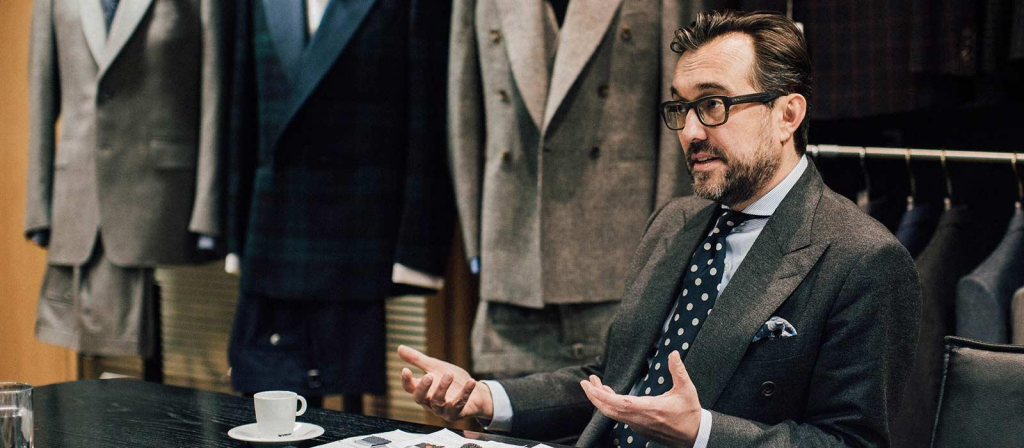
Heavier fabrics—typically ranging from 12 to 16 ounces—naturally create a more structured silhouette. They hold shape with minimal assistance, allowing for sharp lines, defined shoulders, and a pronounced chest. This is why heavier cloth is often associated with classic British tailoring, where structure and authority are emphasized.
In contrast, lightweight fabrics—around 7 to 9 ounces—produce a markedly different result. These materials are softer, more fluid, and more responsive to movement. Rather than imposing form, they follow the body’s natural contours, creating a relaxed and effortless aesthetic. However, this softness comes at a cost: without sufficient internal support, the garment can lose its shape over time.
Thus, fabric weight does not merely influence comfort—it dictates the very architecture of the suit.
Softness vs. Stability: A Tailor’s Balancing Act
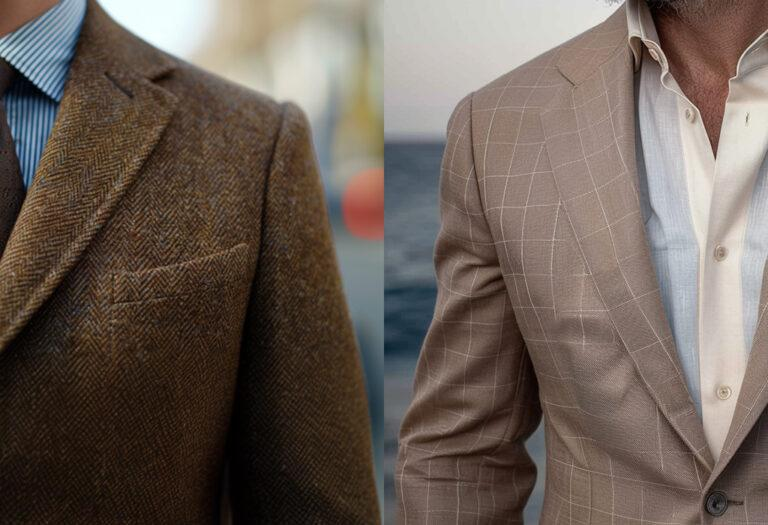
Structured vs Unstructured Suits: What’s the Difference?
Beyond weight, the inherent stiffness or softness of a fabric plays a crucial role in structural design. Stiffer fabrics, often found in traditional woolens, provide natural resistance and stability. They require less internal reinforcement, as the cloth itself contributes to maintaining the garment’s shape.
Softer fabrics, on the other hand, present a more complex challenge. Luxurious materials such as high Super wool or cashmere offer unparalleled comfort and drape, but they lack the rigidity needed to sustain a structured silhouette. In these cases, the tailor must compensate by carefully engineering the internal construction—using canvas, padding, and stitching techniques to “build” structure from within.
This dynamic creates a fundamental principle of bespoke tailoring:
“The softer the fabric, the more deliberate and sophisticated the internal construction must be.”
The Language of Drape
Drape—the way fabric falls and moves—is perhaps the most visually expressive aspect of a suit’s structure. It is through drape that fabric quality becomes immediately perceptible.
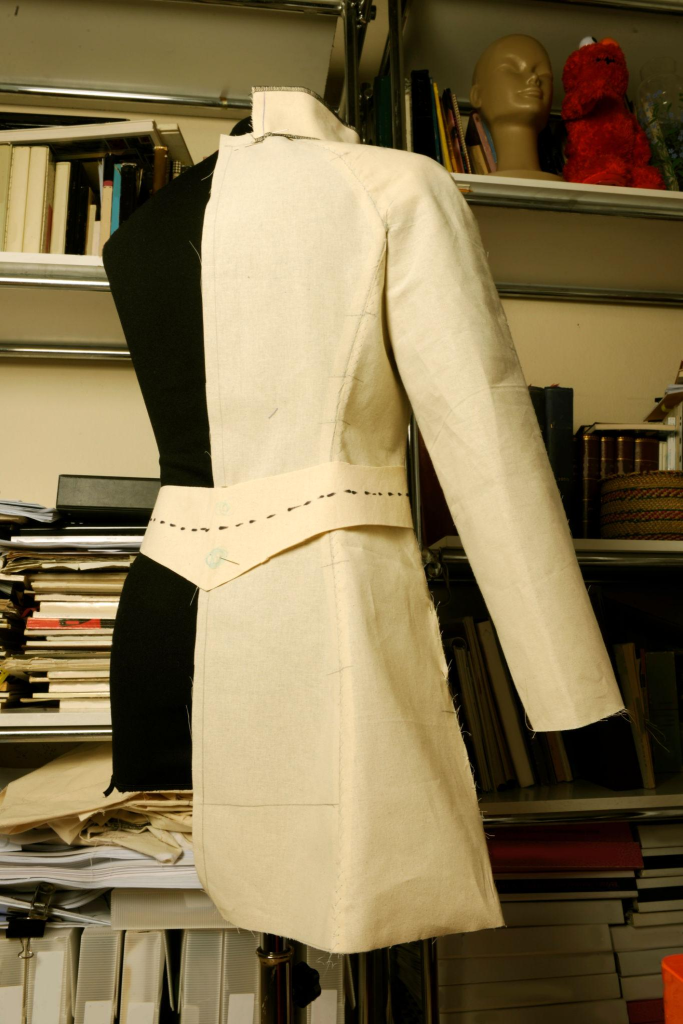
High-quality fabrics with excellent drape create garments that move fluidly, enhancing the wearer’s presence with subtle elegance. These fabrics allow for softer silhouettes, where the jacket follows the body rather than constraining it. This approach is often associated with Italian tailoring, where comfort and natural movement are prioritized.
Conversely, fabrics with less drape produce a firmer, more sculpted appearance. Here, the suit asserts its form, creating a strong visual structure that remains consistent regardless of movement. This is characteristic of more traditional tailoring philosophies.
Drape, therefore, is not merely aesthetic—it is a structural language shaped by the fabric itself.
Fiber Quality and Structural Longevity
Not all luxury fabrics behave the same over time. Fiber quality—particularly in wool—introduces a trade-off between softness and durability.
High Super wool fabrics (such as Super 150s or 180s) are prized for their fineness and smooth texture. However, these same qualities make them more delicate. They are more prone to wrinkling, less resistant to abrasion, and less capable of retaining structure over prolonged use.
By contrast, lower Super wools (Super 100s to 120s) offer greater resilience. While slightly less soft, they maintain their shape more effectively and are better suited for garments intended for frequent wear.
This tension between luxury and longevity forces both tailor and client to make a strategic decision: prioritize tactile refinement or structural endurance.
Fabric and Canvas: A Critical Partnership
No discussion of structure is complete without addressing the relationship between fabric and internal construction—particularly canvas.
In bespoke tailoring, canvas acts as the skeletal framework of a suit, shaping the chest and allowing the garment to mold to the wearer over time. However, the effectiveness of canvas is deeply influenced by the quality of the outer fabric.
High-quality fabrics respond more dynamically to canvas construction. They stretch, adapt, and settle, creating a living garment that evolves with use. This is why full-canvas construction is typically reserved for premium fabrics—it allows both material and structure to perform at their highest level.
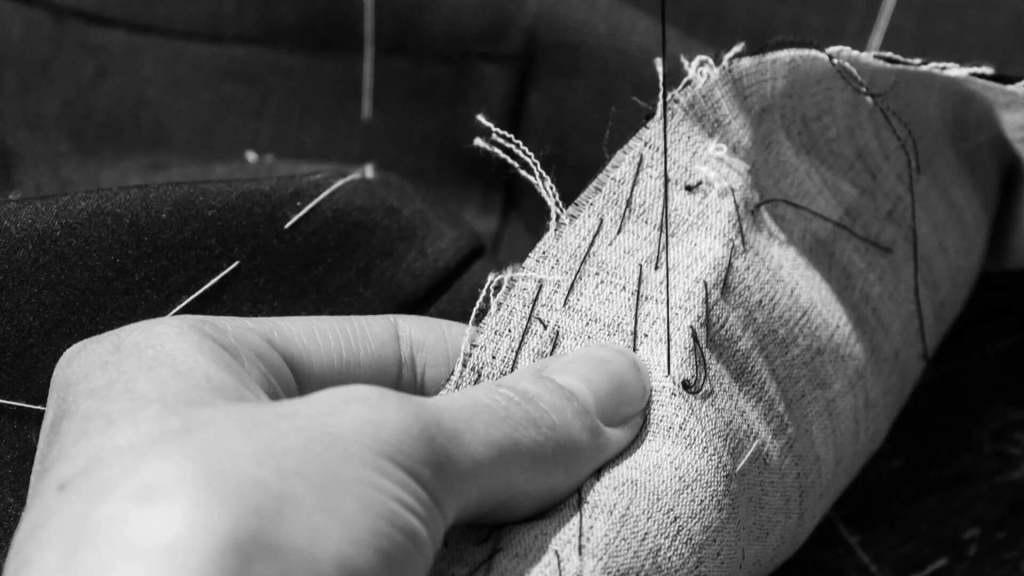
In contrast, fused construction—where adhesive is used instead of stitching—fails to interact harmoniously with luxury fabrics. It restricts movement, diminishes breathability, and often leads to premature degradation.
In essence, fabric and canvas must work in synergy. One cannot reach its full potential without the other.
Beyond Aesthetics: Function and Seasonality
Fabric quality also determines how a suit performs in real-world conditions. Breathability, thermal regulation, and moisture management are all functions of fiber composition and weave.
Lightweight tropical wools, for example, are designed for warm climates, offering ventilation and comfort without sacrificing elegance. Heavier flannels, by contrast, provide insulation and structure, making them ideal for colder seasons.
Thus, the structure of a suit is not static—it adapts to context, guided by the functional properties of the fabric.
Structure Begins with Fabric
Ultimately, the structure of a bespoke suit is not imposed upon the fabric—it emerges from it. Every choice, from silhouette to internal construction, is shaped by the inherent qualities of the material itself.
Fabric quality determines how a suit stands, how it moves, and how it endures. It dictates whether structure is natural or engineered, rigid or fluid, temporary or lasting. In this sense, fabric is not simply a component of tailoring—it is its foundation.
In an era increasingly dominated by mass production, bespoke tailoring continues to affirm a timeless principle: true structure is not manufactured—it is crafted, beginning with the finest materials.